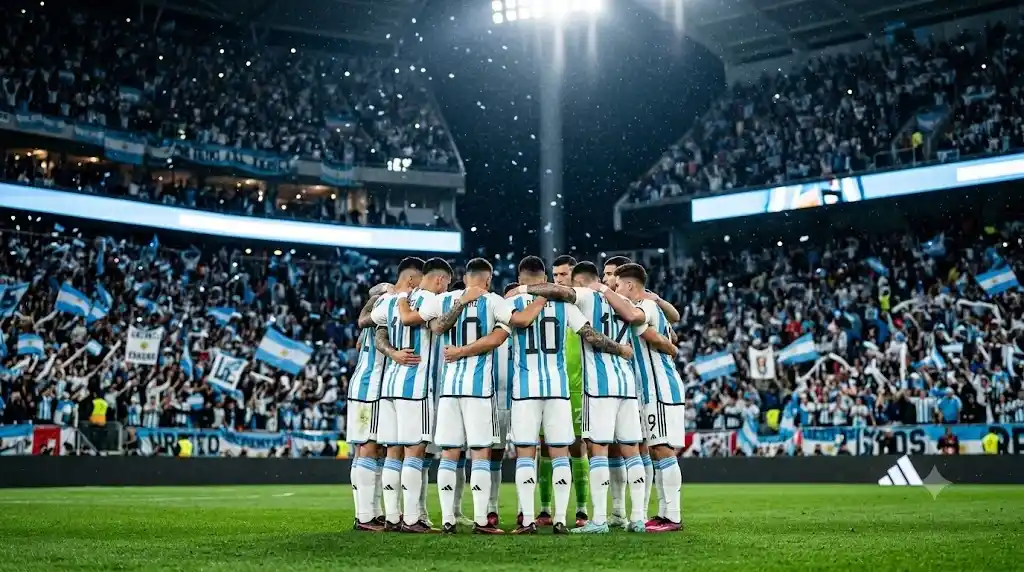
The Argentina national football team is one of the most famous and successful teams in international football. The team is known for its sky-blue and white colours, passionate supporters and a long tradition of producing world-class players.
From Diego Maradona’s unforgettable performances to Lionel Messi’s historic achievements, Argentina has given football fans some of the most memorable moments in the sport. The team has also enjoyed major success in the FIFA World Cup, Copa América and other international competitions.
In this guide, we take a closer look at the Argentina national football team, including its history, famous players, major trophies, playing style, recent achievements and the next generation of Argentine talent.
Argentina National Football Team History
Argentina has a long and fascinating history in international football. The team played its first recognised international match against Uruguay in 1902 and gradually became one of the strongest football nations in South America.
The national team is governed by the Argentine Football Association (AFA) and competes in international competitions under CONMEBOL.
Argentina’s football identity has always been closely connected with technical skill, creativity and attacking football. Over the years, the country has produced generations of talented players who have gone on to become stars at major clubs around the world.
Argentina’s First FIFA World Cup Final
Argentina reached its first FIFA World Cup final in 1930, during the first edition of the tournament in Uruguay.
The team faced the hosts in the final but finished as runners-up. Although Argentina did not win the trophy, reaching the final established the country as an important force in international football.
It would take several decades before Argentina finally lifted the World Cup trophy.
Argentina’s 1978 World Cup Triumph
Argentina won its first FIFA World Cup in 1978, when the tournament was held in Argentina.
Playing in front of home supporters, Argentina reached the final against the Netherlands. The match was closely contested, but Argentina eventually won 3–1 after extra time.
Mario Kempes was one of the major stars of the tournament and played a key role in Argentina’s success.
The 1978 victory was a historic moment because Argentina had finally become world champions on home soil.
Argentina’s 1986 World Cup Success
The 1986 FIFA World Cup is one of the most important chapters in Argentina’s football history.
The tournament in Mexico was dominated by the performances of Diego Maradona, who captained Argentina and played a central role throughout the competition.
Argentina defeated England in the quarter-final, Belgium in the semi-final and West Germany in the final.
The final ended with a 3–2 victory for Argentina, giving the team its second FIFA World Cup trophy.
Diego Maradona and the 1986 World Cup
Maradona’s performance against England remains one of the most famous individual displays in World Cup history.
He scored twice in Argentina’s 2–1 quarter-final victory. One goal became known as the “Hand of God”, while his second goal involved a spectacular run past several England players.
Maradona continued to play a major role as Argentina progressed to the final and lifted the World Cup trophy.
Argentina in the 1990 World Cup
Argentina reached another World Cup final in 1990.
The team was once again led by Diego Maradona and managed to reach the final in Italy. Argentina faced West Germany in the title match.
West Germany won the final 1–0, meaning Argentina finished as runners-up.
Despite missing out on the trophy, reaching consecutive World Cup finals showed the strength of Argentina’s football generation during that era.
Argentina’s 2014 World Cup Campaign
Argentina returned to the World Cup final in 2014, with Lionel Messi leading the team.
The tournament was held in Brazil, and Argentina produced a strong defensive and tactical performance throughout the competition.
Argentina defeated Switzerland, Belgium and the Netherlands during the knockout stages before reaching the final against Germany.
The final was decided in extra time, with Germany winning 1–0.
Although Argentina did not win the tournament, Messi’s performances throughout the competition earned him the Golden Ball as the tournament’s best player.
Lionel Messi and Argentina’s Modern Era
Lionel Messi has played a huge role in Argentina’s modern football history.
For many years, Argentina came close to winning major international trophies but fell short in important finals. That changed during the 2021 Copa América.
Argentina defeated Brazil in the final at the Maracanã Stadium, giving Messi his first major senior international trophy with Argentina.
The victory also helped build confidence within a team that would go on to achieve even greater success.
Argentina’s 2022 Finalissima Victory
In 2022, Argentina faced Italy in the Finalissima at Wembley Stadium.
The match brought together the winners of the Copa América and UEFA European Championship.
Argentina won the match 3–0, with the team producing a confident performance against the European champions.
The victory gave Argentina another international trophy and increased expectations ahead of the 2022 FIFA World Cup.
Argentina’s 2022 FIFA World Cup Victory
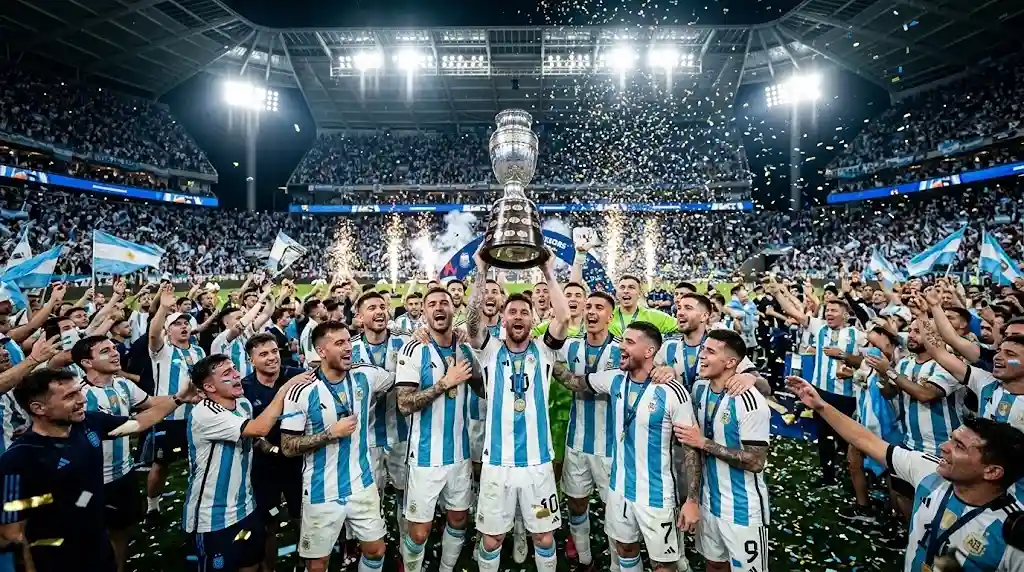
The 2022 FIFA World Cup in Qatar became one of the most memorable tournaments in Argentina’s history.
Argentina’s campaign did not begin as expected. The team suffered a surprise defeat against Saudi Arabia in its opening match.
However, Argentina recovered and went on to win its remaining group matches before progressing through the knockout stages.
The team defeated Australia in the round of 16, the Netherlands in the quarter-final and Croatia in the semi-final.
Argentina vs France in the Final
The final against France was one of the most dramatic matches in World Cup history.
Argentina took a two-goal lead during the first half, with Lionel Messi scoring from the penalty spot and Ángel Di María adding another goal.
France came back strongly in the second half. Kylian Mbappé scored twice to bring the match level.
Messi scored again in extra time, but Mbappé completed his hat-trick with another penalty, sending the match to a shootout.
Argentina eventually won the penalty shootout and became FIFA World Cup champions for the third time.
For Messi, the victory was particularly special because it completed his collection of major international honours with Argentina.
Argentina’s 2024 Copa América Success
Argentina continued its impressive run by winning the 2024 Copa América.
The tournament took place in the United States, where Argentina advanced through the group stage and knockout rounds before reaching the final against Colombia.
The final remained goalless during regulation time before Lautaro Martínez scored the winning goal in extra time.
Argentina’s victory gave the team another major international trophy and continued its successful era under Lionel Scaloni.
Argentina National Football Team Players
One of Argentina’s biggest strengths has always been its ability to produce talented footballers.
The modern squad includes experienced players who have already won major trophies as well as younger players looking to establish themselves internationally.
Lionel Messi
Lionel Messi is the most recognisable player associated with the Argentina national team.
He has represented Argentina in multiple World Cups and Copa América tournaments and has played a central role in the team’s modern success.
Messi has won the Copa América, Finalissima and FIFA World Cup with Argentina. His dribbling, passing, finishing and ability to create chances have made him one of the most influential players in football history.
Emiliano Martínez
Emiliano Martínez became a key figure for Argentina during its successful modern era.
The goalkeeper was particularly important during the 2021 Copa América and 2022 World Cup. His saves and performances during penalty shootouts helped Argentina in several difficult moments.
His confidence and personality have also made him a popular figure among Argentine supporters.
Enzo Fernández
Enzo Fernández is one of Argentina’s important modern midfielders.
He offers passing ability, energy and strong positional awareness. His performances during the 2022 World Cup helped him establish himself at the international level.
Fernández can contribute both defensively and offensively, making him useful in different midfield roles.
Julián Álvarez
Julián Álvarez is one of Argentina’s most exciting attacking players.
His movement, pressing and finishing allow him to play in different attacking positions. He was an important part of Argentina’s 2022 World Cup-winning squad.
Álvarez’s ability to work hard without the ball also fits well with Argentina’s team-oriented approach.
Lautaro Martínez
Lautaro Martínez has become one of Argentina’s leading forwards.
He combines physical strength with intelligent movement and good finishing ability.
Lautaro has scored important goals for Argentina, including the winning goal in the 2024 Copa América final.
Alexis Mac Allister
Alexis Mac Allister has become an important part of Argentina’s midfield.
He is comfortable passing the ball, moving into attacking areas and helping the team defensively.
His ability to connect midfield and attack gives Argentina another option when building attacks.
Rodrigo De Paul
Rodrigo De Paul is known for his energy and competitive style.
He covers a lot of ground in midfield and often helps Argentina maintain its intensity during difficult matches.
De Paul became an important member of the team during its Copa América and World Cup successes.
Cristian Romero
Cristian Romero provides strength and aggression in central defence.
He is known for his tackling, physical presence and willingness to compete for every ball.
Romero has become one of the key defenders in Argentina’s modern team.
Nicolás Otamendi
Nicolás Otamendi brings experience and leadership to Argentina’s defence.
He has represented the national team across several major tournaments and has played an important role alongside Argentina’s younger defenders.
His experience has been valuable in high-pressure international matches.
Other Argentina Players to Watch
Argentina’s talent pool is much bigger than its most famous names.
The country continues to develop young players who can become important members of the national team in the future.
Some names that have attracted attention include Nico Paz, Valentín Barco, Giuliano Simeone, Thiago Almada and José Manuel López.
These players represent the next generation of Argentine football and could become important parts of the team’s future.
Lionel Scaloni and Argentina
Lionel Scaloni has played an important role in Argentina’s recent success.
Under his leadership, Argentina won the 2021 Copa América, 2022 Finalissima, 2022 FIFA World Cup and 2024 Copa América.
Scaloni’s approach has focused on creating a balanced team where experienced players and younger talents can work together.
Instead of depending completely on individual brilliance, Argentina has developed a more organised structure while still allowing its creative players freedom in attacking areas.
Argentina’s 2026 World Cup Journey
The 2026 FIFA World Cup represented another important stage in Argentina’s international football story.
The expanded tournament introduced a new format and included more teams than previous editions.
Argentina entered the competition with a squad containing experienced players and emerging talents. The tournament also provided an opportunity for the next generation to gain experience alongside established international stars.
The 2026 campaign added another chapter to Argentina’s long World Cup history and highlighted the depth of talent available to the national team.
Argentina’s Playing Style
Argentina’s football style combines technical quality with tactical organisation.
The team is traditionally known for:
- Quick and accurate passing
- Creative midfield play
- Strong attacking movement
- Individual dribbling ability
- Effective counter-attacks
- Good set-piece delivery
- Compact defensive organisation
- Strong team mentality
Argentina can control possession when needed but can also play directly when there is space behind the opposition defence.
The team’s ability to change its approach depending on the opponent has been an important part of its recent success.
Argentina’s Major International Trophies
Argentina has won several major international trophies throughout its history.
FIFA World Cup
Argentina has won the FIFA World Cup three times:
- 1978
- 1986
- 2022
The team has also reached several other World Cup finals, making Argentina one of the most successful nations in the competition.
Copa América
Argentina has enjoyed major success in the Copa América.
Its recent victories in 2021 and 2024 were particularly important because they helped establish the team’s successful modern era.
Finalissima
Argentina won the 2022 Finalissima by defeating Italy 3–0 at Wembley Stadium.
The victory added another international trophy to the team’s collection.
Famous Argentina Football Players
Argentina has produced some of the greatest footballers in the history of the sport.
Some of the most famous names include:
- Diego Maradona
- Lionel Messi
- Mario Kempes
- Gabriel Batistuta
- Daniel Passarella
- Javier Zanetti
- Juan Román Riquelme
- Ángel Di María
- Sergio Agüero
- Javier Mascherano
Each generation has contributed something different to Argentina’s football identity.
Argentina National Team Records and Legacy
Argentina’s football legacy has been built through World Cup success, Copa América titles and generations of outstanding players.
The country has produced legendary forwards, creative midfielders, strong defenders and world-class goalkeepers.
From Mario Kempes and Diego Maradona to Lionel Messi and the current generation, Argentina has consistently developed players capable of performing at the highest level.
The rivalry between Argentina and Brazil is also one of the most famous rivalries in South American football. Matches between the two nations attract huge attention from football fans around the world.
Why Argentina Has Such a Strong Football Culture
Football is deeply connected to Argentine culture.
Young players often develop their skills through local clubs before moving to larger Argentine teams or European leagues. Technical ability, close control, creativity and tactical awareness are highly valued.
The national team’s international success has also inspired generations of young footballers.
Argentina’s combination of football tradition, passionate supporters and world-class talent has helped establish the country as one of the major football nations.
Argentina National Football Team FAQs
When did Argentina first win the FIFA World Cup?
Argentina won its first FIFA World Cup in 1978. The tournament was hosted in Argentina, and the home team defeated the Netherlands 3–1 after extra time in the final.
Which stadium is home to the Argentina national team?
Argentina does not have one permanent home stadium for every international match. The team plays across different venues in the country, with Estadio Monumental in Buenos Aires frequently hosting major Argentina fixtures.
What are Argentina’s traditional team colours?
Argentina traditionally wear sky blue and white striped shirts, paired with white or dark shorts depending on the kit. These colours are closely associated with the country’s national identity and are the reason behind the nickname La Albiceleste.
Who scored Argentina’s famous 1986 World Cup goals against England?
Diego Maradona scored both of Argentina’s goals in the 2–1 quarter-final victory over England at the 1986 World Cup. The match became one of the most memorable games in Argentina’s football history.
Who could become Argentina’s next generation of stars?
Argentina’s squad continues to include younger players alongside experienced internationals. Names such as Nico Paz, Valentín Barco, Giuliano Simeone, Thiago Almada and José Manuel López represent some of the younger talent available to the national team.
When did Argentina play its first international football match?
Argentina played its first recognised international match against Uruguay in 1902. Argentina won the historic fixture 6–0, marking an important early moment in the country’s international football history.
How many times has Argentina reached the FIFA World Cup final?
Argentina has reached the FIFA World Cup final six times: in 1930, 1978, 1986, 1990, 2014 and 2026. The team won the World Cup in 1978, 1986 and 2022.
What does the nickname La Albiceleste mean?
La Albiceleste refers to Argentina’s traditional sky-blue and white colours. The nickname comes from the distinctive colours of the national team’s football kit.
What is special about Argentina’s 2026 World Cup campaign?
Argentina’s 2026 World Cup campaign added another significant chapter to the team’s international history, giving a new generation of players the opportunity to compete on football’s biggest stage.
What major achievements came during the Lionel Scaloni era?
During Lionel Scaloni’s tenure, Argentina won major international trophies including the 2021 Copa América, 2022 Finalissima, 2022 FIFA World Cup and 2024 Copa América. These achievements represent one of the most successful periods in the team’s modern history.
Final Thoughts
The Argentina national football team has a remarkable history filled with legendary players, major trophies and unforgettable matches.
From the 1978 and 1986 World Cup victories to the modern success of Lionel Messi and the 2022 World Cup triumph, Argentina has continued to create memorable moments on the international stage.
The emergence of younger players alongside experienced stars also gives the national team an evolving squad for future competitions.
Argentina’s football story is ultimately about more than individual players. It is a combination of history, tactical development, national pride and a long-standing tradition of competing for major international honours.